This blog discusses the use of Integrated Pest Management (IPM) in Nebraska Schools. IPM utilizes a variety of methods, such as sanitation, exclusion, mechanical controls, and biological controls to manage pests. IPM strives to reduce pesticide use, improve human health and safety, and protect the environment.
Monday, October 8, 2012
Bed Bug Interactive Publication Now Available!
A new interactive bed bug publication is now available from UNL! Through text, links, and videos, Managing Bed Bugs, by Barb Ogg, Fred Baxendale, and Clyde Ogg, covers information about bed bugs such as biology, prevention techniques, and methods for control. It also covers the use of bed bug sniffing dogs to detect the presence of bedbugs.
In addition, the individual videos found in this electronic publication can be viewed on our PSEP YouTube Channel:
How Bed Bug Sniffing Dogs Work
Meet Spots, the only bed bug sniffing dog in Nebraska. James Pelowski, his owner, trainer, and handler, talks about the use of dogs for detecting bed bugs.
How to Prevent Bed Bugs from Infesting a Bed
This video highlights a few different ways to prevent bed bugs from accessing and infesting a bed and mattress.
How to Inspect a Bed for Bed Bugs
Learn where to look and what to look for when inspecting a bed for possible bed bug infestation.
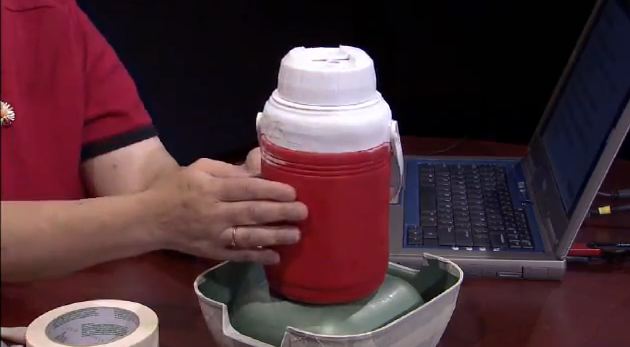
How to Build a Bed Bug Monitoring Trap
Dr. Barb Ogg from UNL Extension in Lancaster County walks you through the process of creating a bed bug trap from common household supplies.
Thursday, September 13, 2012
Fall Invaders
It's that time of year again...pests will be coming inside to escape the cooler weather. Millipedes, Multicolored Asian Ladybird Beetles, boxelder bugs, and wolf spiders are just some of the uninvited guests that will try to share our homes and schools with us this fall. Most of these pests are harmless, but all are a nuisance and some make people uncomfortable when they find them in the house.
House mice can also be worse in the fall. Since rodents can carry disease, it is essential to prevent entry of these pests.
By applying IPM methods such as exclusion, you can keep the pests outside where they belong!
Learn more about these pests and how to control them by visiting the following resources:
Boxelder Bugs
Fall Invaders
House Mice
Millipedes
Multicolored Asian Ladybird Beetles
Nuisance Pests
Rodent-Proof Construction
Wolf Spiders in Nebraska
House mice can also be worse in the fall. Since rodents can carry disease, it is essential to prevent entry of these pests.
By applying IPM methods such as exclusion, you can keep the pests outside where they belong!
Learn more about these pests and how to control them by visiting the following resources:
Boxelder Bugs
Fall Invaders
House Mice
Millipedes
Multicolored Asian Ladybird Beetles
Nuisance Pests
Rodent-Proof Construction
Wolf Spiders in Nebraska
Thursday, August 23, 2012
How-To Dramatization Webinar and Video
On Tuesday Pierce and I held a professional development webinar for AAPSE (American Association of Pesticide Safety Educators) about how to create and use dramatization videos in PSEP and IPM programs. We had a great turnout and received a lot of positive feedback!
In addition to our powerpoint presentation, we showed the "How-To" Dramatization video, filmed a few months ago, which outlined the steps for making a dramatization video. To view the video, please visit: http://bit.ly/O4XrpL
Monday, August 20, 2012
NCRPECW in Michigan
Our PSEP Office just got back from the biennial North Central Region Pesticide Education and Certification Workshop (last held in Nebraska City!) in Grand Rapids, Michigan. Paul Hay, one of our Extension Educators, also joined us.
We had 2 1/2 days of meetings with some interesting talks about sharing manuals and exams, pollinators, social media (given by Pierce and me), inversions, pesticide measurements, risk communication, mini bulk tanks, and soil fumigation label requirements. There were also presentations about pests such as bed bugs and emerald ash borer.
One afternoon we took a tour to Ottawa to learn about mini bulk tanks and pesticide roadside applications, and then to Grand Haven, where we explored the shops, museums, and restaurants, and took a walk along the famous boardwalk!
In addition, the American Association of Pesticide Safety Educators (AAPSE) had a meeting for its membership to provide updates and discuss the latest issues, including who will host the next regional meeting (Purdue volunteered).
This interesting and productive meeting was a great opportunity to see and network with other midwest colleagues who work in the PSEP and IPM fields!
We had 2 1/2 days of meetings with some interesting talks about sharing manuals and exams, pollinators, social media (given by Pierce and me), inversions, pesticide measurements, risk communication, mini bulk tanks, and soil fumigation label requirements. There were also presentations about pests such as bed bugs and emerald ash borer.
One afternoon we took a tour to Ottawa to learn about mini bulk tanks and pesticide roadside applications, and then to Grand Haven, where we explored the shops, museums, and restaurants, and took a walk along the famous boardwalk!
In addition, the American Association of Pesticide Safety Educators (AAPSE) had a meeting for its membership to provide updates and discuss the latest issues, including who will host the next regional meeting (Purdue volunteered).
This interesting and productive meeting was a great opportunity to see and network with other midwest colleagues who work in the PSEP and IPM fields!
Monday, July 30, 2012
Tribal In-services
Each school had custodial or kitchen staff representatives with whom we discussed pest problems and conducive conditions, and we also provided them with a variety of print resources, including two identification books for common pests (Inspector's Field Guide for Pest Identification and Common Pests Found in Schools and Day Care Centers) and UNL publications on cockroaches, IPM in sensitive environments, and ants (one-node and two node). After each discussion, we toured the school, visiting areas that were more likely to have pests or conditions conducive to them, such as kitchens, custodial closets, and teacher's lounges.
We are going to revise and update the previous recommendations for each school and then prioritize which issues are most important to address in each location.
Thursday, July 19, 2012
Half-Day IPM Coalition Meeting
It's been awhile since I've updated my blog, but we have quite a few IPM events coming up, so I hope to remedy that!
Yesterday we had our second annual half-day educational workshop for our IPM coalition. We had participants from OPS, EPA, Lancaster County Health Department, NDA, USDA-APHIS, tribes, and UNL Extension.
Omaha Public Schools gave an excellent presentation about their use of IPM from its conception to the current goal of getting IPM Star Certification for their 84 schools by 2016. The thorough and dedicated job this school district is doing generated a lot of great discussion amongst the group!
In addition, Clyde and I updated coalition members about our IPM assessments in day cares last year and our upcoming in-service with the tribes in Winnebago and Omaha next week. Katie Howard spoke about EPA's IPM program, Dennis Ferraro talked about IPM techniques such as exclusion to pest-proof the perimeter of buildings, and Stephen Vantassel talked about birds, ground squirrels, pocket gophers, moles, and voles, and how best to control these pests. The workshop was very informative and engaging, resulting in a lot of interest and questions. We will also be distributing the PDF versions of the Powerpoint presentations to the coalition email list for those who couldn't join us.
On October 24th, we will have our last IPM coalition meeting of the year. Our speakers will be Lincoln Public Schools, who will, like OPS did at this meeting, discuss use of IPM in their district.
Yesterday we had our second annual half-day educational workshop for our IPM coalition. We had participants from OPS, EPA, Lancaster County Health Department, NDA, USDA-APHIS, tribes, and UNL Extension.
Omaha Public Schools gave an excellent presentation about their use of IPM from its conception to the current goal of getting IPM Star Certification for their 84 schools by 2016. The thorough and dedicated job this school district is doing generated a lot of great discussion amongst the group!
In addition, Clyde and I updated coalition members about our IPM assessments in day cares last year and our upcoming in-service with the tribes in Winnebago and Omaha next week. Katie Howard spoke about EPA's IPM program, Dennis Ferraro talked about IPM techniques such as exclusion to pest-proof the perimeter of buildings, and Stephen Vantassel talked about birds, ground squirrels, pocket gophers, moles, and voles, and how best to control these pests. The workshop was very informative and engaging, resulting in a lot of interest and questions. We will also be distributing the PDF versions of the Powerpoint presentations to the coalition email list for those who couldn't join us.
On October 24th, we will have our last IPM coalition meeting of the year. Our speakers will be Lincoln Public Schools, who will, like OPS did at this meeting, discuss use of IPM in their district.
Wednesday, May 23, 2012
Pest PI in School 2015 newsletter
The word is spreading about our free Pest Private Eye game on the web! I recently was interviewed about the game by the IPM Institute for their School IPM 2015 newsletter. Check it out!
Please also let educators who might be interested in incorporating Pest PI into their science curricula know about the game's availability. It's a great way to teach the next generation about IPM!
Subscribe to:
Posts (Atom)
