This blog discusses the use of Integrated Pest Management (IPM) in Nebraska Schools. IPM utilizes a variety of methods, such as sanitation, exclusion, mechanical controls, and biological controls to manage pests. IPM strives to reduce pesticide use, improve human health and safety, and protect the environment.
Showing posts with label bed bug sniffing dogs. Show all posts
Monday, October 8, 2012
Bed Bug Interactive Publication Now Available!
A new interactive bed bug publication is now available from UNL! Through text, links, and videos, Managing Bed Bugs, by Barb Ogg, Fred Baxendale, and Clyde Ogg, covers information about bed bugs such as biology, prevention techniques, and methods for control. It also covers the use of bed bug sniffing dogs to detect the presence of bedbugs.
In addition, the individual videos found in this electronic publication can be viewed on our PSEP YouTube Channel:
How Bed Bug Sniffing Dogs Work
Meet Spots, the only bed bug sniffing dog in Nebraska. James Pelowski, his owner, trainer, and handler, talks about the use of dogs for detecting bed bugs.
How to Prevent Bed Bugs from Infesting a Bed
This video highlights a few different ways to prevent bed bugs from accessing and infesting a bed and mattress.
How to Inspect a Bed for Bed Bugs
Learn where to look and what to look for when inspecting a bed for possible bed bug infestation.
How to Build a Bed Bug Monitoring Trap
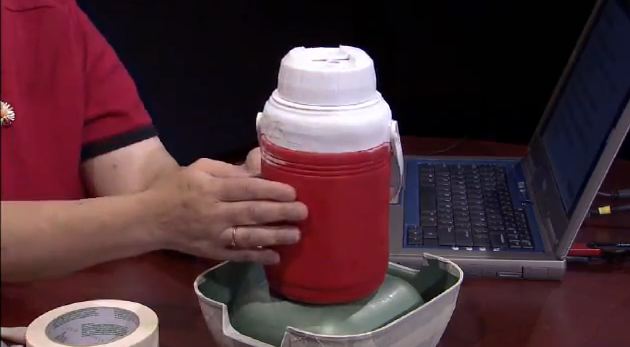
Dr. Barb Ogg from UNL Extension in Lancaster County walks you through the process of creating a bed bug trap from common household supplies.
Wednesday, July 27, 2011
IPM in Schools Coalition
We had a great half day educational IPM in Schools coalition meeting today! In addition to the donuts and pizza, there were a lot of great reasons that people joined us :-)
About 22 people attended, including representatives from OPS and LPS, child care (Lancaster County Health Dept and Dept of Education), pest management professionals, UNL Extension, EPA, and NDA. Presentations included Clyde's introduction to Nebraska IPM projects, including tribal IPM, the revision of the IPM manual, and the completion of the "Conducting IPM in Schools" video. Barb presented about bed bugs and James Pelowski and Spots from K9 Bed Bug Detection did a bed bug sniffing dog demonstration. After the break, I spoke about pests, pesticides and health, including findings in recent studies such as the Ag Health Study and Farm Family Exposure study. Finally, Brad Smith, a PMP in West Des Moines, IA, talked about his experiences working with school facility managers on implementing IPM in their schools.
Following the meeting, we had lunch and networking and got a lot of good feedback and ideas for future meetings. We also spoke with the coalition members involved in child care and are planning to do presentations and projects in that area in coming months.
Wednesday, June 29, 2011
"Mock" Bed Bug Inspection
Last week Clyde, Barb, our UNL videographer and I went to an apartment to stage a mock bed bug inspection for an interactive video project. We walked through all the steps of what someone might do to check for and treat for a bed bug infestation, including many IPM strategies. I will highlight some of these steps here.

One of the first things to do is inspect in and around the bed by taking down the bedclothes and checking the bedspread, pillowcases, sheets, and mattress pad. These should then be put into a large plastic bag, carried to the laundry room, and washed and dried.
Next, inspect the mattress, especially around the seams. You should also look at the box springs, including removing the dust cloth. In addition, remove the headboard if possible, check behind picture frames above the headboard, and pull the bed away from the wall.
Besides the bed, you should look at drawers, cracks and crevices, and other potential hiding places within the infested room. Couches and recliners are also good bed bug harborage locations.

After examining the mattress, you can put bed bug encasements on the box springs and mattress, which prevents any bed bugs that are already on the bed from getting out and feeding on you at night. It also prevents new bed bugs from getting into the seams of the mattress and in and under the box springs.

To prevent bed bugs from other locations from crawling up the bed posts, you can install "intercepters," which are little plastic devices that can be placed under bed posts at night. Bed bugs can crawl up these, but then fall into a "pit" that they are unable to get back out of. This is good for monitoring the bed bug population and an additional benefit is capturing bed bugs that otherwise would be feeding on people!

In addition to a human inspection, you may choose to hire a bed-bug sniffing dog! These dogs are trained to hone in on the scent of live bed bugs and can find bugs that a human may not. In our video we featured "Spots," a rat terrier from Nebraska's K9 Bed Bug Detection. According to his handler, Spots is 95% accurate in finding bed bugs, where humans average 30-40%. After putting some "scent" from bed bugs in the couch and the bed, we watched as Spots did his job, and he hit on these areas very accurately!

If there is a heavy infestation, pesticide application may be necessary. Some low toxic products, such as diatomacheous earth, can be placed in hard to reach areas, such as behind electrical outlets. Pesticides such as DDT that were used in WWII and before to control bed bugs have been banned due to the health risks to humans. Research is being done to find new treatments, as bed bugs have shown resistance to a lot of chemistry that used to successfully control them. In our video we spoke with a PMP, who explained inspection and treatment options for a homeowner dealing with bed bugs. With the resurgence of bed bugs, more PMPs are responding to calls about this pest and serving as educational resources. They are using a combination of techniques, including not only what has been mentioned here, but also vaccuming, steam, and heat treatments.
To read more about bed bugs, check out this article from the Lancaster County Extension Office. You can also view more photos of our mock inspection from our PSEP Facebook page.
NOTE: No live bed bugs were harmed during the filming of this video :-) We only used ones that were already dead!
One of the first things to do is inspect in and around the bed by taking down the bedclothes and checking the bedspread, pillowcases, sheets, and mattress pad. These should then be put into a large plastic bag, carried to the laundry room, and washed and dried.
Next, inspect the mattress, especially around the seams. You should also look at the box springs, including removing the dust cloth. In addition, remove the headboard if possible, check behind picture frames above the headboard, and pull the bed away from the wall.
Besides the bed, you should look at drawers, cracks and crevices, and other potential hiding places within the infested room. Couches and recliners are also good bed bug harborage locations.
After examining the mattress, you can put bed bug encasements on the box springs and mattress, which prevents any bed bugs that are already on the bed from getting out and feeding on you at night. It also prevents new bed bugs from getting into the seams of the mattress and in and under the box springs.
To prevent bed bugs from other locations from crawling up the bed posts, you can install "intercepters," which are little plastic devices that can be placed under bed posts at night. Bed bugs can crawl up these, but then fall into a "pit" that they are unable to get back out of. This is good for monitoring the bed bug population and an additional benefit is capturing bed bugs that otherwise would be feeding on people!
In addition to a human inspection, you may choose to hire a bed-bug sniffing dog! These dogs are trained to hone in on the scent of live bed bugs and can find bugs that a human may not. In our video we featured "Spots," a rat terrier from Nebraska's K9 Bed Bug Detection. According to his handler, Spots is 95% accurate in finding bed bugs, where humans average 30-40%. After putting some "scent" from bed bugs in the couch and the bed, we watched as Spots did his job, and he hit on these areas very accurately!
If there is a heavy infestation, pesticide application may be necessary. Some low toxic products, such as diatomacheous earth, can be placed in hard to reach areas, such as behind electrical outlets. Pesticides such as DDT that were used in WWII and before to control bed bugs have been banned due to the health risks to humans. Research is being done to find new treatments, as bed bugs have shown resistance to a lot of chemistry that used to successfully control them. In our video we spoke with a PMP, who explained inspection and treatment options for a homeowner dealing with bed bugs. With the resurgence of bed bugs, more PMPs are responding to calls about this pest and serving as educational resources. They are using a combination of techniques, including not only what has been mentioned here, but also vaccuming, steam, and heat treatments.
To read more about bed bugs, check out this article from the Lancaster County Extension Office. You can also view more photos of our mock inspection from our PSEP Facebook page.
NOTE: No live bed bugs were harmed during the filming of this video :-) We only used ones that were already dead!
Labels:
bed bug encasements,
bed bug sniffing dogs,
bed bugs,
IPM
Thursday, October 7, 2010
October 6th Coalition Meeting
Our guest speaker was Tom Green, who is president of the IPM Institute in Madison, WI. He discussed details about the process for a school to become IPM Star Certified, including maintaining records, working with the PMP to use IPM methods rather than routine spray applications, and generally controlling pests such as cockroaches and mice and improving conducive conditions to discourage pests. The IPM Star certification includes an on-site visit from a 3rd party professional who evaluates the school and provides them with a written list of recommendations. The school then addresses any deficiencies the evaluator has noted and contacts the IPM Institute for certification. Schools must score 70% on the evaluation to be certified, and certification lasts for 3 years. It must be renewed with a follow up visit after that time.
Tom also talked about Green Shield certification, which is an IPM Star approach to certifying pest management professionals. For more information about IPM Star and Green Shield, visit http://ipmstar.org and http://www.greenshieldcertified.org/providers/
After Tom's presentation, we discussed the August in-service presentations Clyde, Barb, Stephen and I did for LPS and OPS (custodial and/or food service staff), the second visits (Sept 9 for OPS and Sept 23 for LPS) and the planned third demonstration visits (Dec 9 for OPS and Feb 2, 2011 for LPS) Additional IPM and pest (bed bug) training are slated for November 11 (IAQ group) and November 19 (Infection Control group) for LPS.
Mike Daniels then gave a brief overview of the Healthy Tribal Communities training that was held in Sioux City. He said there were 32 attendees and he felt it was a success.
Coalition meetings for next year have been set: Feb 7/8 (Urban Pest Management conference), April 27, July 27, and Oct 26. There was discussion about possibly having half day educational events rather than the two hour meetings we have been doing. There are advantages and disadvantages to this approach, so we'll be evaluating coalition member thoughts and suggestions before making a decision.
Bed bugs were also a topic of discussion (when is it not these days, especially with New York City practically overrun and many other places not far behind!).Barb mentioned that she and Clyde will be giving three bed bug workshops for landlords in October and November. Oct 20 will be in Lincoln, Nov 15 in Grand Island, and November 17 in Omaha. See http://ianrnews.unl.edu/static/1010040.shtml for sign up information. As part of the training (at the Omaha and Lincoln location), they will be featuring Spots, a bed bug sniffing dog owned by James and Amy Pelowski in Lincoln. To learn more about Spots' services, check out their website, K-9 BedBug Detection at http://www.k9bedbugdetect.com/ .
Subscribe to:
Posts (Atom)