This blog discusses the use of Integrated Pest Management (IPM) in Nebraska Schools. IPM utilizes a variety of methods, such as sanitation, exclusion, mechanical controls, and biological controls to manage pests. IPM strives to reduce pesticide use, improve human health and safety, and protect the environment.
Showing posts with label bed bug detector. Show all posts
Monday, October 8, 2012
Bed Bug Interactive Publication Now Available!
A new interactive bed bug publication is now available from UNL! Through text, links, and videos, Managing Bed Bugs, by Barb Ogg, Fred Baxendale, and Clyde Ogg, covers information about bed bugs such as biology, prevention techniques, and methods for control. It also covers the use of bed bug sniffing dogs to detect the presence of bedbugs.
In addition, the individual videos found in this electronic publication can be viewed on our PSEP YouTube Channel:
How Bed Bug Sniffing Dogs Work
Meet Spots, the only bed bug sniffing dog in Nebraska. James Pelowski, his owner, trainer, and handler, talks about the use of dogs for detecting bed bugs.
How to Prevent Bed Bugs from Infesting a Bed
This video highlights a few different ways to prevent bed bugs from accessing and infesting a bed and mattress.
How to Inspect a Bed for Bed Bugs
Learn where to look and what to look for when inspecting a bed for possible bed bug infestation.
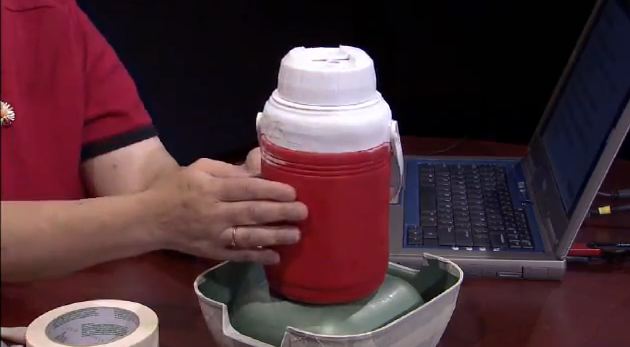
How to Build a Bed Bug Monitoring Trap
Dr. Barb Ogg from UNL Extension in Lancaster County walks you through the process of creating a bed bug trap from common household supplies.
Friday, October 28, 2011
October IPM Coalition
On October 26th we held our last IPM Coalition meeting of 2011. We had a good mix of representatives from the pest control industry, schools, UNL Extension, EPA, child care, and tribes.

Stephen Vantassel with UNL Extension presented on the most common types of bats found in and around houses in Nebraska (Big Brown and Little Brown, which are colony bats), bat life cycle and behavior, and how to safety capture and/or control bats. For more information about bats, see:
Barb talked about a new bed bug detector called “Verifi.” It's small and unobtrusive and can be placed in vulnerable areas in hotels, schools, day cares, etc.
Bed bugs is certainly a hot topic! We also briefly discussed reasons for bed bug resistance and movement and heavily infested areas of the U.S. Barb said she believes the insect has genetically changed worldwide, resulting in its resurgence.
We also talked about our work with Gina on the Child Care IPM assessments, and the in-services we have given for child care directors and providers.
In 2012, we will again have 4 coalition meetings (including the Urban Pest Management Conference). We would like future meetings to primarily consist of educational components, perhaps with a different “theme” or topics for each meeting.
We also want to get involved in more “sensitive environment,” IPM, such as group homes, jails and prisons, zoos, nursing homes, and hospitals. We would like to broaden the scope of this coalition and expand our membership to include more individuals who want to promote IPM concepts.
Stay tuned for the latest updates on the IPM coalition in 2012!

Stephen Vantassel with UNL Extension presented on the most common types of bats found in and around houses in Nebraska (Big Brown and Little Brown, which are colony bats), bat life cycle and behavior, and how to safety capture and/or control bats. For more information about bats, see:
- Bat Nebguide: http://www.ianrpubs.unl.edu/live/g1667/build/g1667.pdf
- Prevention and Control of Wildlife Damage--Bats: http://icwdm.org/handbook/mammals/mam_d5.pdf
- Internet Center for Wildlife Damage Management: http://www.icwdm.org/wildlife/bat/bat.asp
Barb talked about a new bed bug detector called “Verifi.” It's small and unobtrusive and can be placed in vulnerable areas in hotels, schools, day cares, etc.
Bed bugs is certainly a hot topic! We also briefly discussed reasons for bed bug resistance and movement and heavily infested areas of the U.S. Barb said she believes the insect has genetically changed worldwide, resulting in its resurgence.
We also talked about our work with Gina on the Child Care IPM assessments, and the in-services we have given for child care directors and providers.
In 2012, we will again have 4 coalition meetings (including the Urban Pest Management Conference). We would like future meetings to primarily consist of educational components, perhaps with a different “theme” or topics for each meeting.
We also want to get involved in more “sensitive environment,” IPM, such as group homes, jails and prisons, zoos, nursing homes, and hospitals. We would like to broaden the scope of this coalition and expand our membership to include more individuals who want to promote IPM concepts.
Stay tuned for the latest updates on the IPM coalition in 2012!
Labels:
bats,
bed bug detector,
bed bugs,
Child Care IPM,
IPM Coalition,
Urban Pest Management Conference,
Verifi
Subscribe to:
Posts (Atom)